NHS Blood and Transplant says there is a growing need for more black community heritage donors with very rare blood types
There is a growing need for more black community heritage donors with very rare blood types – like Tinashe Chigora - to help people with sickle cell disorder.
Tinashe is on the UK's rare donor panel. His blood is so rare he is called in especially to donate to people with individual people with sickle cell. His blood also helped someone be well enough for a stem cell transplant.
The demand for donors like Tinashe has grown to the level where around half of all special requests to the NHSBT rare blood team are to help people with sickle cell.
It’s especially important that people with sickle cell receive well matched blood. They have misshapen red blood cells and often need lifelong blood transfusions. If they receive blood which is not matched for a minor blood type, they can develop antibodies against that blood type. That makes it hard to find blood they can receive.
Tinashe's story
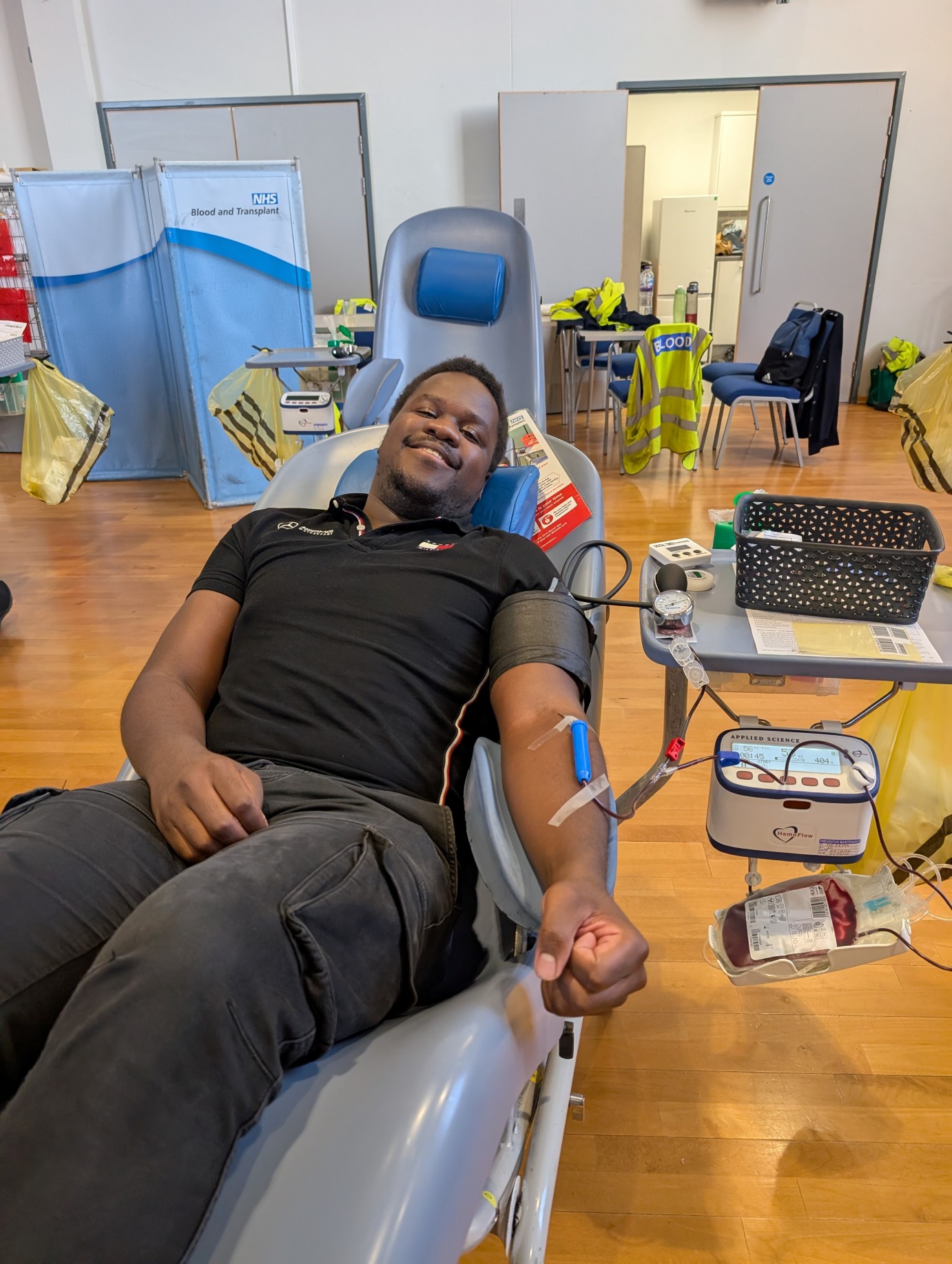 Tinashe, a 29-year-old IT worker from Crawley in West Sussex, started donating after seeing a recruitment stand while studying at the University of the West of England in Bristol.
"I thought 'why not?'" said Tinashe, a keen drummer.
"I donated a few times and I didn’t know my blood was rare. I first realised something was different when I started to notice they treated my blood bag differently.
"I see the same team every time and now we have a bit of banter. They treat me like royalty!.
"I definitely think finding out I have rare blood has encouraged me to be more consistent with my donations. I will always book in when I get the call.
"It's such a small thing for me to do but it could be the difference between someone living and someone dying. I am just happy to help people."
Only about 1,200 out of NHSBT’s 775,000 donors are on the rare donor panel.
People are recruited if they donate and further tests find rare blood types.
There is a growing need for blood for people with sickle cell due to greater use of red cell exchange transfusions – where far more blood is used then in small 'top-up' transfusions, people living longer due to better care, and demographics.
Dr Chiara Vendramin, Clinical Lead for Rare Donor Medicine at NHS Blood and Transplant, said:
"Mr Chigora is one of approximately 20 regular donors who are match for a patient with sickle cell disorder.
"Jsb is a high-frequency antigen. Since Mr Chigora lacks Jsb, his blood phenotype is considered rare. Antigens are markers on the red blood cells that give us our blood type.
"Mr Chigora’s ongoing commitment to blood donation is extraordinary, as is the excellent work of the NHSBT blood collection teams in caring for our rare donors and ensuring that the special call-up process runs smoothly."
She added: "About half of the requests the Rare Donor Team receives are to provide blood for patients with sickle cell disorder, who may need very specific blood types, such as U negative, Fya and Fyb negative and Jsb negative. We call rare donors in to donate for specific patients.
"Patients with sickle cell often have multiple antibodies which means they need rare, matched blood for their repeated transfusions or red cell exchanges. We need more donors of Black heritage because people share the same blood type as someone from the same ethnic background. As a result, there is a growing need for more donors with rare blood types, particularly from Black heritage communities."