Teen with rare blood disorder needed more 100 units of specialist matched platelets to enable groundbreaking brain surgery
A teenager with an extremely rare blood disorder was well enough for groundbreaking brain tumour surgery at Sheffield Children's Hospital thanks to specialist support from NHS Blood and Transplant.
Ahmed, 17, from Sheffield, had a 13-hour operation for a pineal brain tumour. However, his care and the operation were complicated by the fact he also had Bernard-Soulier syndrome, a rare inherited disorder affecting platelet function – which put him at risk of catastrophic bleeding.
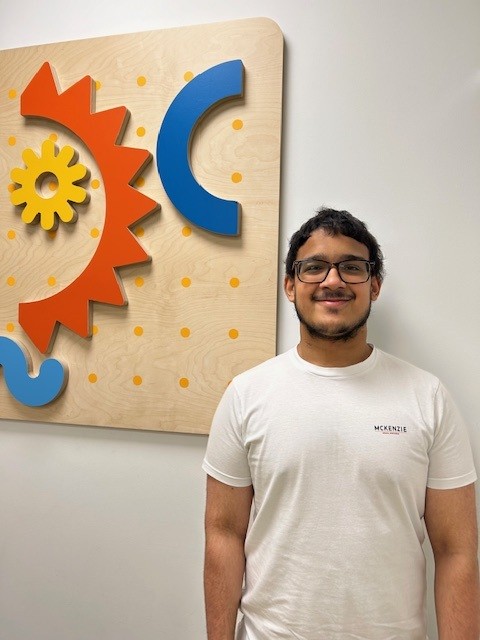 He needed platelet transfusions to replace his own. But these needed to be carefully matched against his tissue types to reduce the risk of his immune system rejecting them.
To help Ahmed, NHS Blood and Transplant has provided 113 units of platelets personally matched for Ahmed, including 10 units for the operation and 24 for the recovery.
His is now recovering well and Sheffield Children's NHS Foundation Trust is sharing his story in the media today.
Ahmed was diagnosed with Bernard-Soulier syndrome soon after birth. He was diagnosed with the pineal brain tumour in 2023 after experiencing double vision. The Sheffield Hospital team carried out the complex operation after chemotherapy didn't stop the tumour growing.
Tests showed Ahmed had developed antibodies against past platelet transfusions which meant he needed transfusions carefully matched against his human leucocyte antigen type.
In the weeks before surgery, Ahmed underwent plasma exchange treatment with NHSBT’s regional Therapeutic Apheresis Services team to reduce the antibodies affecting transfusions.
And during the operation he received carefully selected clotting factors and specially matched platelets while his blood levels were closely monitored.
Kirti Mepani, Clinical Scientist Section Head at NHS Blood and Transplant Colindale, said:
"Platelets are essential for blood clotting and are especially important in people with Bernard-Soulier syndrome, where the body cannot form clots properly.
"But Ahmed could not receive just any platelet donation. They had to be carefully matched to his tissue type so his immune system would accept them.
"He is from a minority ethnic background, which can make it more difficult to find closely matched donors because some groups are under-represented in the donor base.
"This was a very high-risk operation that required close coordination between the clinical team, the hospital blood bank and NHS Blood and Transplant to ensure the right platelets were available.
"I am incredibly proud that our team was able to supply the carefully matched platelets needed to make the surgery possible"