Somerset man amongst first patients to get groundbreaking 'living drug' for blood cancer, after cells collected in Bristol
A Somerset man will become one of the first patients in the country to get a groundbreaking cell therapy for an aggressive cancer.
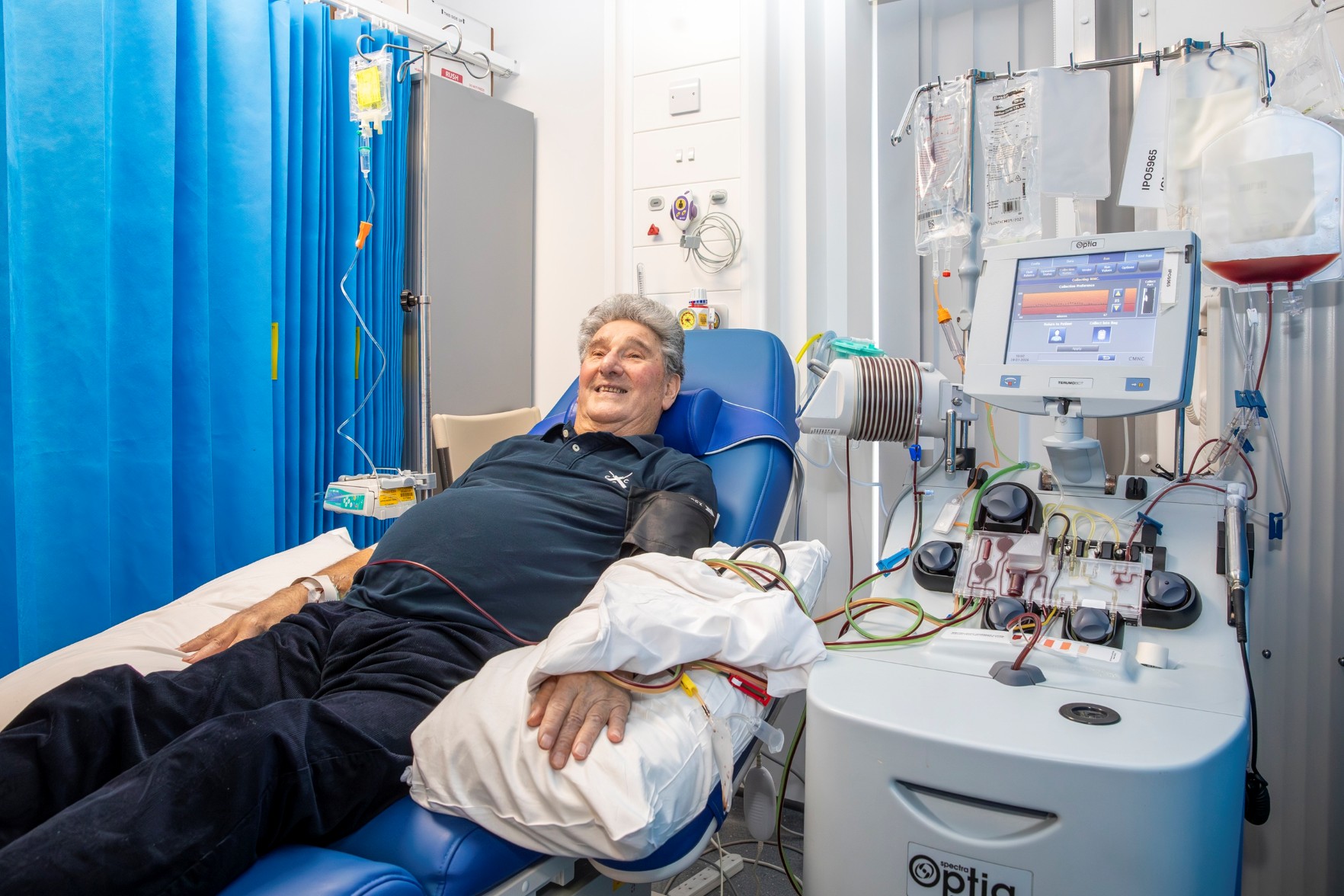 Retired engineer and granddad, Victor Mattravers, 79, had his white blood cells collected by an NHS Blood and Transplant specialist unit in Bristol.
The cells will be modified which will enable them to attack the cancer. The resulting drug is a personalised treatment, specifically for Victor.
The medicine – called aucatzyl – was only recently approved for NHS use after a trial.
It is being used for patients aged over 26 when acute lymphoblastic leukaemia (ALL) has not been cleared by normal treatment.
The medicine is a form of CAR-T therapy developed by the British company Autolus – it is a B-lymphocyte antigen CD19 chimeric antigen receptor CAR T cell therapy.
NHS England has described it as a 'living medicine' and it has made national headlines.
Victor said: "I've had ALL since 2019. I am very grateful to get such a new treatment.
"The cell collection by NHS Blood and Transplant was fine, there was no pain – it was just lay back and let it happen.
"It took about 3 or 4 hours. The staff were very good.
"Hopefully I will be getting the modified cells in March.
"I am a little bit curious and a little bit nervous but hopefully it will lead to long term remission.
"If it keeps proving to work hopefully it will become available to more people."
Victor's white blood cells were collected the NHS Blood Transplant Therapeutic Apheresis Services unit in Bristol, a specialist team which uses machines to remove cells, proteins, or toxins from your blood.
After the white blood cells have been modified by Autolus, NHS Blood and Transplant's Cellular and Molecular Therapies team in Filton, Bristol, will then store the modified cells, before the re-infusion at a hospital.
The first patients began approved treatment in 2026, with around 50 people expected to get the therapy a year. It was approved after a study in which 77% of patients had no signs of cancer and 55% had no signs of cancer and also normal blood cell counts after treatment.