
NHSBT is collecting and storing the white blood cells used in a pioneering 'sci-fi' drug
NHSBT is collecting and storing the white blood cells used in a pioneering 'sci-fi' drug which has hit the headlines.
 Our therapeutic apheresis teams are collecting the blood from many patients who will be getting the new CAR-T therapy, and our cellular and molecular therapies teams are carrying out the specialist storage before re-infusion.
The new therapy is a treatment for B-cell acute lymphoblastic leukaemia, developed by the company Autolus.
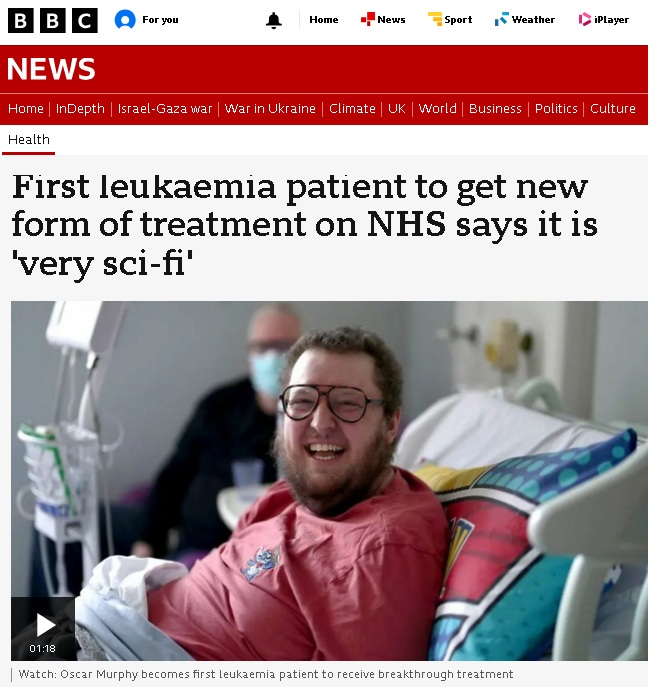
The BBC this week reported on some of the first patients receiving the treatment, with one happy man describing it as 'very sci-fi'.
NHS England’s clinical director for cancer care said it is a 'landmark moment'.
In the treatment, white blood cells called T-cells are collected from the donors circulating blood. The cells are then genetically engineered to fight the cancer. They're then stored and later returned to the patient.
Although NHSBT was not involved with the patient featured in the BBC report, we are already working with other patients, with around 50 people expected to get the therapy a year.
NHSBT's Therapeutic Apheresis Services teams will be collecting in Liverpool, Sheffield, Leeds, Bristol and Oxford – with our first collection carried out in Sheffield last week.
And NHSBT's Cellular and Molecular Therapies laboratories in Barnsley, Birmingham, Oxford, Filton and Southampton will be receiving, storing and issuing the cells after they've been edited.
The drug, brand name Aucatzyl, was funded last year for use in adults aged 26 years and above whose cancer did not respond to or has come back after previous treatment.
It was approved after a study in which 77% of patients had no signs of cancer and 55% had no signs of cancer and also normal blood cell counts after treatment with this new CAR-T therapy.
Lilian Hook, Director of Cell, Apheresis and Gene Therapies for NHSBT, said:
"We're so excited to be working on this groundbreaking therapy – it really shows how our suite of specialist services and national footprint give us the ability to collaborate and innovate with the wider NHS."