NHS starts machine preservation programme to enable more transplants
NHS Blood and Transplant has opened the first of 15 pilot assessment and recovery centres (ARC), where selected donated organs will be preserved and assessed so more can be transplanted.
If the pilot is successful, a full UK system will be created with the ability to also recondition organs. NHSBT predicts a full system would enable up to 750 of extra lifesaving and life improving transplants every year, a 19% increase on current activity. (1)
The ARCs programme is a unique venture which could unlock a step change in organ transplantation, at a time when the transplant waiting list is higher than it has ever been. (2)
The pilot – supported by all 4 UK Governments - trials creating regional hubs specialising in organ perfusion, where oxygenated blood or nutrient-rich fluids are circulated through organs, preserving their function. (3)
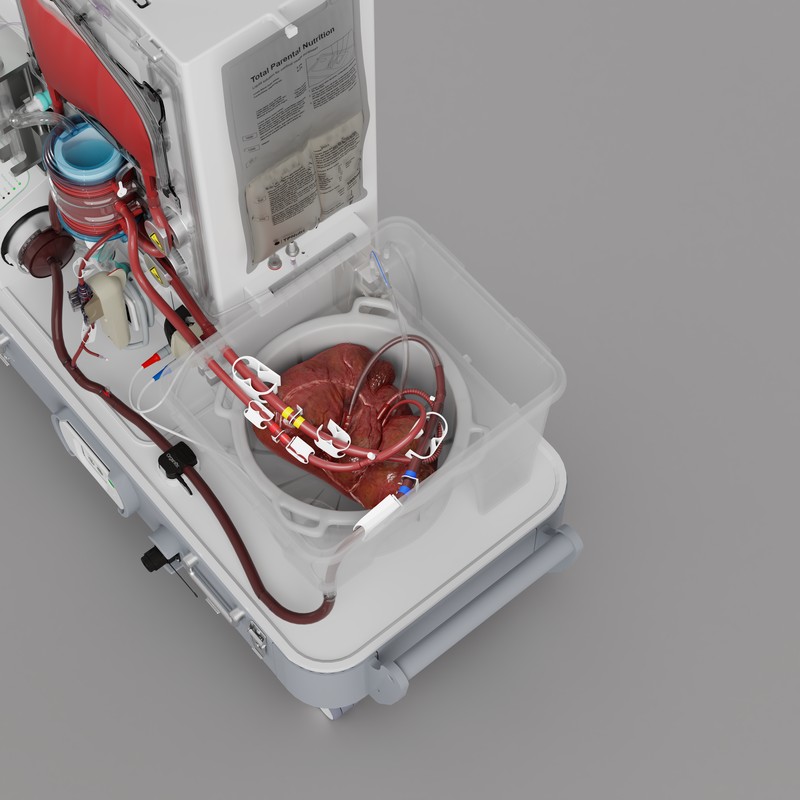 The ARCS will give more time for assessment, so more organs can be accepted for transplant. Currently, many organs are not transplanted simply because the short time scales involved mean there is too little time to carry out tests, so clinicians are not confident enough to accept them for transplant.
The first of the lung pilot centres has now opened at Royal Papworth Hospital in Cambridge opened, with lung pilot sites at The Freeman Hospital in Newcastle and Harefield Hospital in London to follow soon. The 12 liver and kidney pilot centres will open in the coming months. (4) Some organs which have not yet been accepted for transplant will go to the ARCs, for longer assessment, so some can be accepted for transplant.
Innovation is needed. Each year hundreds of people die waiting for a transplant. Meanwhile, hundreds of potential donor organs are not retrieved or transplanted because there is such a limited time to assess how well they could function. The potential donor pool is also reducing as the population ages and more people live with long term health conditions. (5)(6)(7)(8).
The ARCS model is being piloted following a recommendation by the Department of Health and Social Care's Organ Utilisation Group Report. (9) With DHSC funding, NHSBT has made agreements with several transplant centres to provide the pilot service. Perfusion is already used to varying extents at different centres. Investment will promote best practice, ensure expertise, reduce the pressures on some centres, and support equal access for patients.
If the pilot successfully provides proof of concept and then a full ARC model is implemented, dedicated ARC facilities would be created.
In a full ARCs model, organs could also receive additional reconditioning treatments – such as surgical repairs, medications, blood group changing or cell therapies. It will also enable more organs which still cannot be transplanted to instead be used for potentially lifesaving medical research.
Statements
Press release notes
- This would be the equivalent of 400 additional deceased donors every year, together providing up to 202 additional liver transplants per year, up to 202 additional lung transplants per year, and up to 345 additional kidney transplants per year. The average transplant would also be expected to successfully function for several more years. Last year (24/25) 3,882 organs were transplanted from deceased donors.
- The transplant waiting list is now consistently over 8,000. As of January 29, it stood at 8,237 people.
- Ex-situ normothermic machine perfusion works by circulating a combination of warm, oxygenated blood and perfusion solution through the organ. The machine pumps blood through the organs' blood vessels providing it with oxygen and nutrients. It also removes waste products from the organ to help maintain it at body temperature and enable extended preservation of the organ, to enable a viability assessment to be undertaken.
- The transplant centres acting as pilot sites are - Kidney; Cambridge, Newcastle, Oxford, Edinburgh, Royal Free, Manchester, Hammersmith. Liver; Cambridge, Royal Free, Kings College, Edinburgh, Newcastle. Lung; Papworth, Newcastle, Harefield. Other transplant centres may support the pilot in the future. If the pilot is successful, dedicated multi-organs ARC facilities would be created.
- 463 people died while on the active organ transplant waiting list in 2024-25, up from 372 in 2019-20 (pre-COVID levels).
- The average donor in 2014/15 was aged 50 and had a BMI of 27. In 24/25 the average donor was aged 53 and had a BMI of 28.
- The total number of patients on the transplant waitlists is also growing, outpacing transplant activity. The transplant waiting list on January 29,2026, was 8,237. This compares to 6,138 people at the end of February 2020, just prior to the pandemic.
- Shifts in the donor pool have changed the types and quality of organs which are donated. The share of deceased donors after circulatory death (DCD) has increased over the decade to nearly half of deceased donors, while the number of patients donating after brain stem death (DBD) has declined by 18% compared to pre-COVID levels. Organs from DCD organs generally have lower function due to spending more time without oxygen and nutrients during the dying process, which means they benefit more from perfusion.
- View the DHSC report - Honouring the gift of donation: utilising organs for transplant Report of the Organ Utilisation Group