NHS and military join forces to develop battlefield transfusion in era of drone warfare
Defence Medical Command and NHS Blood and Transplant have signed a strategic partnership which will help innovate battlefield transfusion in an era of drone warfare.
 The agreement was signed by the most senior Defence Medical Command leaders at NHSBT's largest blood centre.
The joint research will drive research, improve urgent transfusion care in complex environments, and have dual use capability, supporting civilian emergency care by air ambulances, trauma units, and more.
The partnership delivers on key goals in the 2025 Strategic Defence Review, which calls for Defence Medical Command and the NHS to work more closely together, increasing shared capacity and capability for the benefit of both. (1)
The agreement affirms a wider strategic bond that began when the national blood service was created from the pioneering work by the army's transfusion service during the second world war.
Today, the close relationship remains, but warfighting has changed.
Innovation in battlefield trauma care is even more important in a new era of drone warfare. Drones kill people more in Ukraine than artillery. They keep the battlefield under constant surveillance, inhibiting movement. More care - including transfusions - needs to be delivered closer to the frontline or at the point of injury. Developing transfusion products which are both portable and easy to transfuse is critical.
What the partnership means
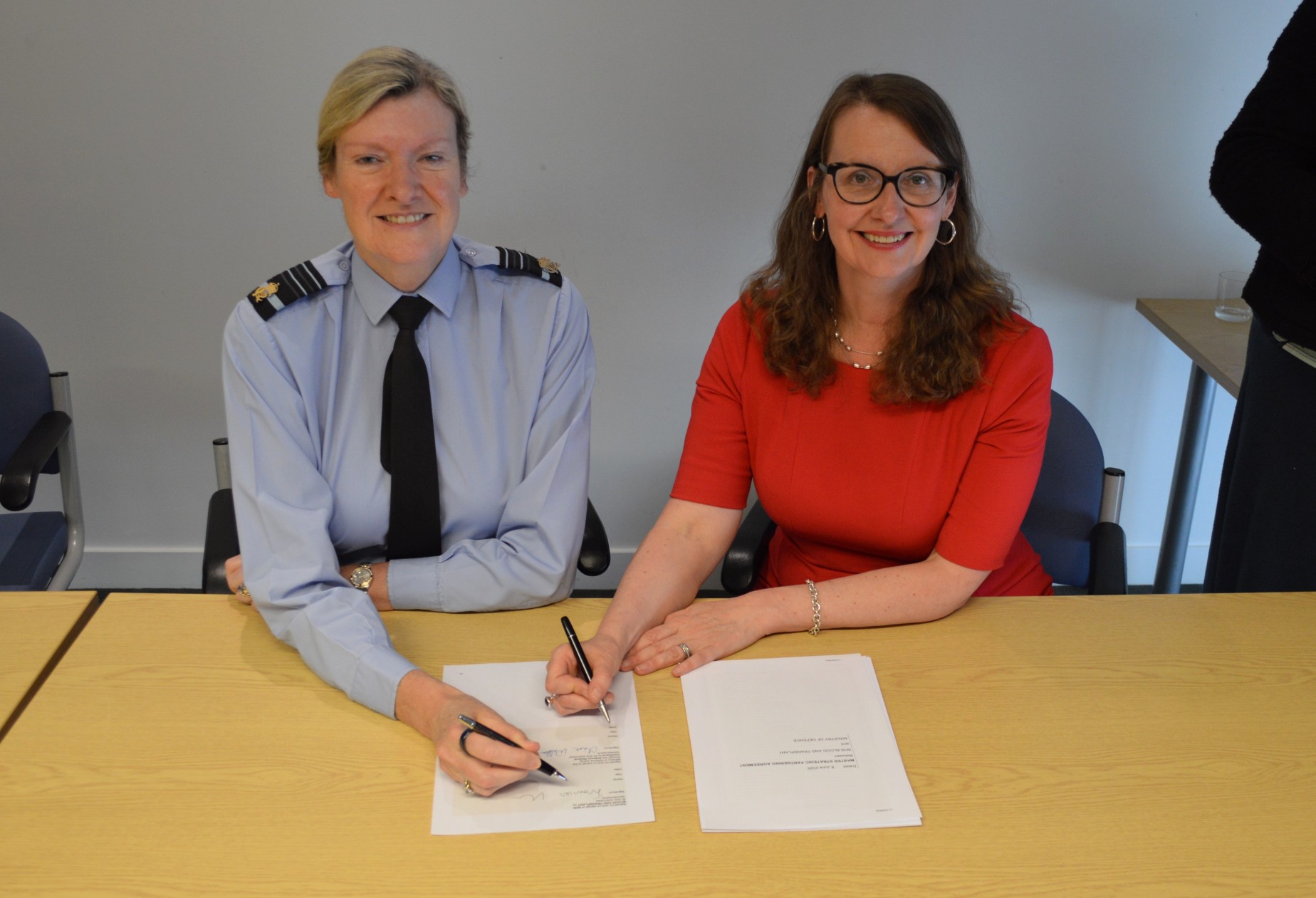 The partnership was signed at NHSBT's largest blood testing and processing facility in Filton in Bristol, by Air Marshal Clare Walton, who is Chief Defence Medical at Defence Medical Command, and by NHSBT's Chief Executive, Frances O'Callaghan.
The joint work includes:
- The Spray Dried plasma project for battlefield trauma, for use in battlefield trauma care, under the Blood Far Forward programme. Plasma is needed for massive blood loss; dried plasma can be stored and carried more easily, making it more suitable for battlefield use.
- NHSBT is the leader of the SWiFT trial, working with Air Ambulance services and the Ministry of Defence to assess the safety and feasibility of whole blood for prehospital transfusion. Whole blood is easier to store and transfuse than multiple blood products, so it can be used in difficult situations.
- Collaboration on research and development covering both blood and blood components, and supporting capability such as blood group testing.
- NHSBT will provide further expert haematology and product safety advice to the Ministry of Defence and their NATO partners, supporting trauma product development and transfusion governance.
- NHSBT is also trialling using drones to deliver blood, separate to the partnership, which could have military use on the future.
Research forms one part of the partnership.
There are 3 other pillars set out a vision to collaborate on NHSBT's clinical support to the armed forces such as providing blood for deployments, specialist education and training, and engagement with the North Atlantic Treaty Organization (NATO) Blood Panel. (2)
It will also help both organisations scale-up services in the event of major conflict.
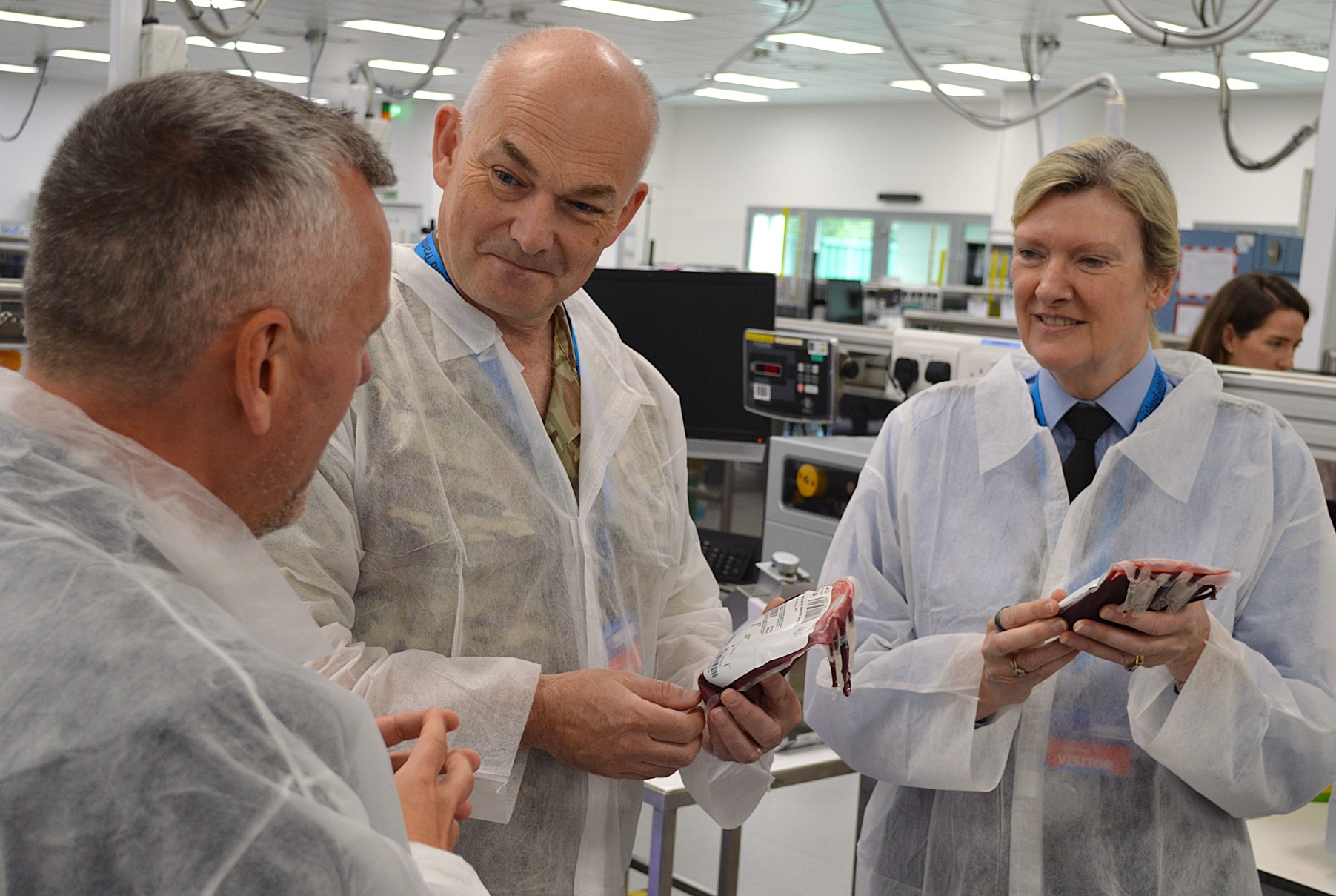
After signing the agreement, Air Marshal Claire Walton and Surgeon General Major General Phil Carter toured the blood manufacturing hall and scientific laboratories.
Statements
Press release notes
1. Referenced on Page 130 of the Strategic Defence Review 2025
2. The partnership consolidates and coordinate activity across 4 priority areas of mutual interest and existing cooperation:
- Clinical delivery, including (a) Clinical use of blood and blood components for resuscitation in the deployed setting (b) Blood management, assurance and enabling capability, including governance, data transfer, equipment for storage, testing, and collection, and diagnostic elements necessary to maximise blood availability and trauma support.
- Research and development covering both blood and blood components and supporting capability (e.g. point-of-care screening / grouping devices). This includes collaborative funding activity, partnering on research proposals, and continuing to promote the importance of R&D in blood products across HMG and external funders.
- Training and education.
- North Atlantic Treaty Organization (NATO) engagement via the NATO Blood Panel to promote