National collaboration delivers first lung transplant through Assessment and Recovery Centres programme
The first lung transplant has been successfully completed through the UK's landmark new Assessment and Recovery Centres (ARCs) pilot programme, marking a major milestone in efforts to increase the number of life-saving organ transplants.
 The ARCs programme introduces a new model of transplantation in which an organ is donated at one hospital, taken to a second hospital to be placed on a perfusion machine where its function is carefully assessed, and then transplanted at a third hospital.
Developed by NHS Blood and Transplant, in collaboration with the cardiothoracic transplant community, and funded by the Department of Health and Social Care, ARCs is the first national programme of its kind in the world.
It is expected to eventually increase the number of transplants by around 20%, potentially helping save or improve an additional 750 lives every year.
The first transplanted lungs were donated at a hospital in the north of England. They were then transported to Royal Papworth Hospital in Cambridge for ex vivo lung perfusion (EVLP) assessment (1). They were then transported to Queen Elizabeth Hospital Birmingham for transplant. The recipient is recovering well and has been discharged from hospital.
The ARCs model has been designed to make the best possible use of donated organs by providing transplant teams with more information about organ function before a transplant takes place.
Currently, some organs fall into a clinical ‘grey area’, where initial assessments do not provide enough information to confidently determine whether they are suitable for transplant. Because decisions must often be made within a matter of hours, such organs can be declined out of caution.
Through the ARCs programme, organs can undergo additional functional assessments using machine perfusion technology at the second hospital, which allows clinicians to evaluate suitability for transplant in greater detail.
This gives a transplant team at a third hospital greater confidence when considering organs for transplantation. The programme has significant potential to unlock crucial additional transplant activity, particularly for lung patients.
A liver has already been transplanted through the pilot programme, and additional pilot sites, including kidney pilot centres, will launch over the coming months.
If the pilot programme is successful, ARCs could become the standard approach for assessing organs that require further evaluation before transplantation.
The programme builds on over a decade of pioneering work in organ perfusion undertaken by transplant centres across the UK.
By bringing expertise together in a coordinated national programme, ARCs aims to increase access to transplantation, support organ sharing across the country, and establish a consistent national approach to assessment and preservation.
The ARCs programme will have 15 pilot sites, when all are rolled out (2). If this pilot program is successful and a UK national service created, several dedicated and specialist ARC centres would be created.
In the future, there is potential for organs to be treated during machine perfusion to improve their quality and how well they function after transplantation.
Statements
Marius Berman, Clinical Director for Transplantation at Royal Papworth Hospital NHS Foundation Trust, which was the ARCs lung pilot site performing the perfusion, said:
“Transplantation is truly transformative and a core activity at Royal Papworth, so we are proud to have played an instrumental part in a wider national cardiothoracic community effort.
“We were pleased to contribute our expertise in ex vivo lung perfusion for this first lung transplant in the ARCs programme. This important milestone reflects years of innovation and collaboration across the transplant community.
“Our hope is that this pilot enables more donor lungs to be safely assessed and transplanted, giving more patients the opportunity to receive a life-changing transplant.”
Mr Aaron Ranasinghe, Consultant Heart and Lung Transplant Surgeon and Transplant Programme Lead at University Hospitals Birmingham NHS Foundation Trust, which was the transplanting hospital, said:
“This landmark transplant demonstrates what can be achieved when NHS organisations collaborate in new and innovative ways to make the very best use of donated organs. Through the ARCs programme, expertise from specialist teams across the country can be brought together to assess, preserve, and successfully transplant organs that may previously have been declined.
“For our patients, this represents more life-changing opportunities, and it is an exciting glimpse of the future. By enabling more detailed assessment of donor organs and extending the opportunities for organs to reach suitable recipients, we are honouring the precious gift from donors and their families.”
Minister of State for Health Karin Smyth said:
“This is a fantastic example of British medical innovation saving lives. I am incredibly proud that the UK is hosting the first national programme of this kind anywhere in the world, giving patients a better chance of a life-changing operation.
“This breakthrough could help save or improve an additional 750 lives every year, and it is a testament to the skill and collaboration of our NHS staff and scientists that the UK is a world leader in this field.
“We are determined to build an NHS fit for the future, one that harnesses cutting-edge science to improve outcomes for patients. This is exactly the kind of innovation that will help us do that.”
Press release notes
- Ex-situ normothermic machine perfusion works by circulating a combination of warm, oxygenated blood, medication and perfusion solution through the organ. The machine pumps blood through the organs' blood vessels providing it with oxygen and nutrients. It also removes waste products from the organ to help maintain it at body temperature and enable extended preservation of the organ, to enable a viability assessment to be undertaken.
- The transplant centres acting as ARC pilot sites are: Kidney - Cambridge, Newcastle, Oxford, Edinburgh, Royal Free, Manchester, Hammersmith. Liver -Cambridge, Royal Free, Kings College, Edinburgh, Newcastle. Lung – Royal Papworth, Newcastle, Harefield. Other transplant centres may support the pilot in the future. If the pilot is successful, dedicated multi-organs ARC facilities would be created.
Image
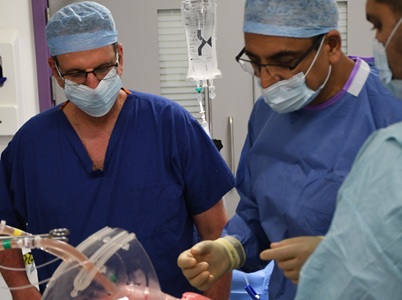
- Consultant surgeons Mr Marius Berman and Mr Pradeep Kaul observing the lungs