
London’s specialist blood testing lab has been transformed to help the rising number of people who need complex blood testing.
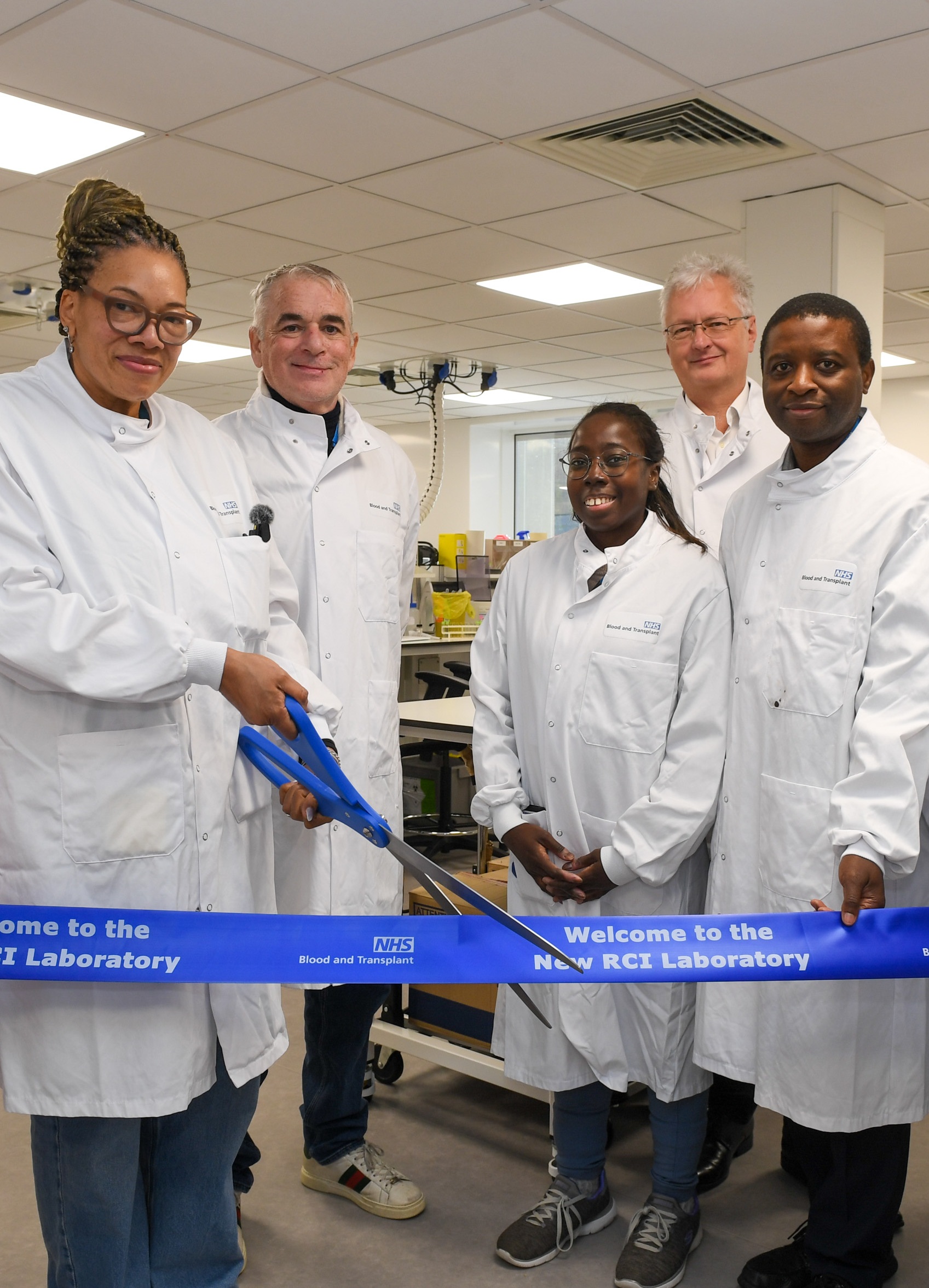 The investment in the new Red Cell Immunohaematology (RCI) in Colindale will help seriously ill patients with rare and complex blood type get matching blood transfusions to save their lives.
NHS Blood and Transplant (NHSBT) held the special reopening to mark the investment.
When a London patient's blood types are too complicated for a hospital to resolve or a specialist test is needed, the case is referred to Colindale.
The total number of hospital referrals to Colindale RCI is increasing by around 7% to 10% each year. The lab carried out 18,000 investigations last year. Around 60% of these are complicated cases.
People can have rare or complex blood types naturally. And, they can develop complex types if they receive multiple blood transfusions.
About the lab
The new lab has more space and a more modern environment, thanks to a significant investment by NHSBT, so it has the capacity to do more testing.
It will also be able to introduce news tests – such as flow cytometry, which is used in foetal maternal screening, and genotyping, used for carrying out DNA-based blood type testing. The lab is also future ready for any work needed in a future pandemic. Other new features include new air handling units, better cold storage, improved lighting, and an improved layout.
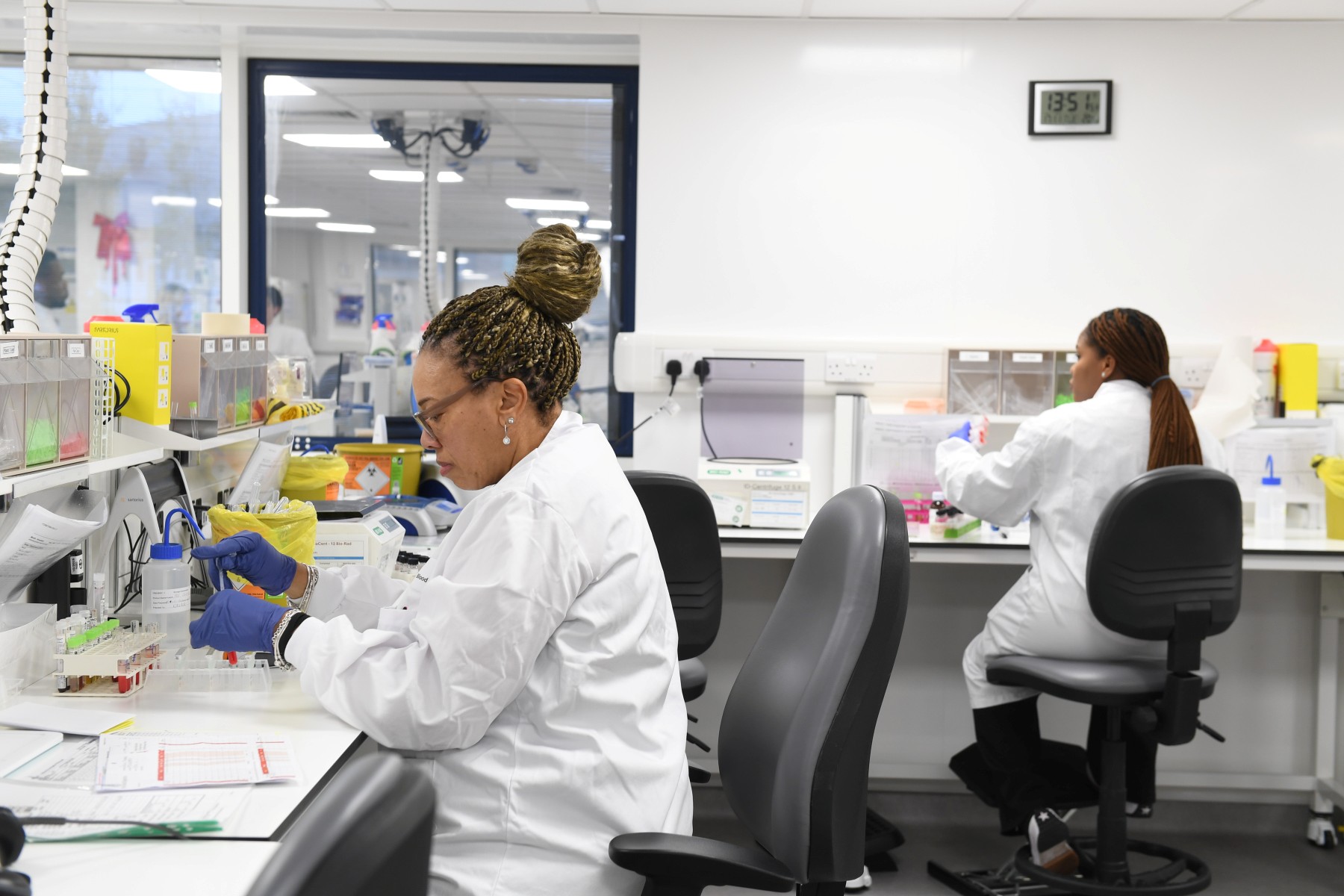 The increase in work is driven by a more diverse population and an increase in the number of patients with complicated or rare blood types.
Colindale supports patients with a wide range of conditions including:
- Sickle cell and thalassemia – genetic disorders more common in black and Asian people, where the red blood cells don’t properly carry oxygen
- Haemolytic disease of the foetus and newborn – where the mum’s blood mistakenly attacks her baby’s own red blood cells
- Autoimmune haemolytic anaemia, where the immune system mistakenly attacks the body’s own red blood cells
- Blood cancers, such leukaemia
- Blood needs around general surgery, organ transplants, stem cell transplants, and for patients receiving monoclonal antibody therapies, which can interfere with blood type testing
Hazel's story
Hazel Attua from Dagenham, 35, came to the opening because it has tested her complicated blood,
Hazel has sickle cell disorder and has had blood transfusions. She has developed antibodies against blood types she was exposed to. It’s now difficult to find blood she can receive.
If she ever urgently needed a blood transfusion again to save her life from complications such as Acute Chest Syndrome, the Colindale RCI lab would be asked to test her blood types, so that blood could be found.
Hazel said: "The doctors say acute chest syndrome can be life-threatening. People have died from it. It's so important to have correctly matched blood.
"It's important for me know there are ways to test which blood I can receive, I am so thankful to everyone who works there."
Hazel does advocacy campaign for the Sickle Cell Society, carries out educational work with the Sickle Cell Education Series, and helps run a sickle cell support group.
Dominic's story
The Colindale RCI lab investigated Dominic Quinlan's blood so he could receive a lifesaving kidney transplant.
Dominic, a 54-year-old retired care home owner from near Winchcombe in Gloucestershire, was seriously ill on dialysis due to IgA nephropathy, a disorder where the kidney filters become blocked.
He needed a kidney donated by a friend – but it was an incompatible blood group.
His hospital needed to 'clean' the antibodies from blood plasma to stop his immune system rejecting the kidney.
Colindale RCI carried out the advanced testing to confirm enough antibodies had been removed for the transplant to go ahead.
Dominic, a dad of 3 and a grandfather of 2, said: "It was fascinating to see the process and see the people behind the scenes doing the nitty gritty and going that extra mile for me, so I could thank them and find out more. I know from my doctors that the lab's support for me was hugely impressive."
Statements
Laura Hontoria del Hoyo, Director of Pathology for NHSBT, said:
"RCI provides a specialist referral service when hospitals cannot resolve a patient’s complicated blood types.
"We have access to not just out own advanced serological testing but also genomic testing across NHSBT's laboratory network. And while hospitals can crossmatch for what is in their stock, we can test across the entire stock of blood held by NHSBT.
"The new Colindale RCI Laboratory is more than a new physical space. It is a significant investment in our RCI service, our people, and, ultimately, the patients who rely on us.
"We'll be better able to meet future demand and help address health inequalities, particularly for patients with sickle cell and thalassaemia."
Wisdom Musabaike, Assistant Director of Red Cell Immunohaematology at NHSBT, said:
"The transition to the new lab was completed thanks to RCI colleagues and supporting teams. The opening was a chance to thank them for their work and this collective achievement. They now have a more modern environment, and a better working space, which will help us better serve hospitals and patients."
Nationally, NHSBT's national RCI services carried out 106,000 investigations last year. This included 31,000 for pregnant mums – mainly to prevent haemolytic disease of the newborn – and 15,000 for the Ministry of Defence.