
First UK patient given pioneering cancer vaccine for most common lung cancer
NHS Blood and Transplant is playing a vital role in a pioneering cancer vaccine for the most common type of lung cancer.
 Clinicians and researchers at The Clatterbridge Cancer Centre (CCC) and the University of Liverpool are studying the bespoke vaccine, designed to match the unique genetic changes found in patient Chris Jones's tumour in this early-stage clinical trial.
Chris, who lives on the Wirral, has advanced lung cancer that has only partially responded to standard immunotherapy treatment.
It is hoped the vaccine will 'boost' her immune system to recognise tumour cells and attack them after searching them out in her body, so that she can benefit from her cancer treatment for longer.
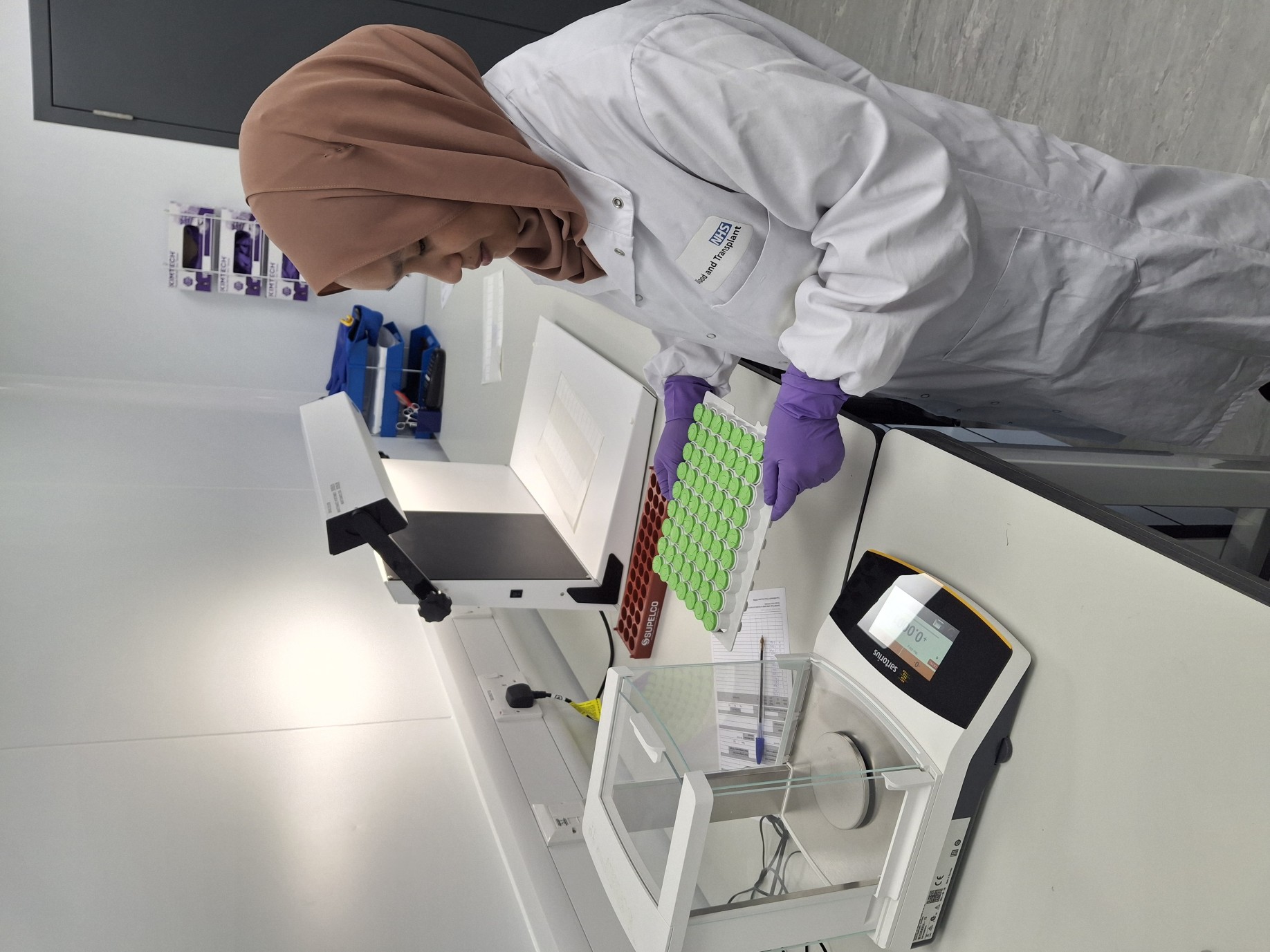
NHS Blood and Transplant's Clinical Biotechnology Centre is working on the final production of the drug and NHS Blood and Transplant's Liverpool Therapeutic Apheresis Services team is collecting Chris’ cells for evaluation.
The project uses an innovative manufacturing method known as 'doggybone DNA' technology.
The technique uses enzymes to copy DNA in a laboratory, producing a shape like a dog’s bone that gives the technology its name. By simplifying production, the researchers hope this approach could, in future, help make personalised cancer vaccines more practical to deliver at scale.
The trial will involve 10 participants with advanced non-small cell lung cancer.
Patient Chris, 68, from the Wirral, said:
"If there was a possibility of me surviving longer, I was happy to be involved with it, and if there is a chance of it helping other people in the future, then that was even better".
The NEOVACC clinical trial is supported by a wide-ranging partnership that includes The University of Liverpool, including the Liverpool Clinical Trials Centre and the GCP Laboratory team, and The Clatterbridge Cancer Centre, which are collaborating closely with
Touchlight Genetics Ltd, NHS Blood and Transplant, GenomeScan, myNEO Therapeutics and PharmaJet to successfully deliver the trial. It is underpinned by a £2.66m grant from the Medical Research Council's Development Pathway Funding Scheme.
The study is led by Professor Christian Ottensmeier, CCC Consultant Oncologist, and Professor Natalia Savelyeva, who are both part of the University of Liverpool's Institute of Systems, Molecular and Integrative Biology.
Statements
Chief Investigator Prof Ottensmeier said:
"This personalised approach could offer hope to those for whom standard immunotherapy has not fully worked, by helping the immune system recognise and fight the parts of the tumour that have previously evaded detection. I hope this research will contribute to new ways of thinking about cancer vaccine use in advanced lung cancer.
Paul Lloyd-Evans, Head of the NHS Blood and Transplant Clinical Biotechnology Centre, said:
"We will do the final work turning the drug into vials of medicine. We transform the bulk therapy product into individually filled, tested and certified medicine vials ready for patient use.
"We have the specialist MHRA licences, GMP-grade clean rooms, and UK-leading expertise, to ensure groundbreaking cell and gene therapies reach patients to the highest standards.
"Our NHSBT Liverpool Therapeutic Apheresis Services team is also a critical part of this trial. Before and after patient Chris is given the vaccine, the TAS team will use specialist machines to separate out some of Chris' blood cells. These cells are tested before and after treatment, to evaluate the effectiveness of the vaccine."