
‘Doctor dog’ monitors owner’s health as she gets life-changing treatment
A 'doctor dog' monitors a young woman's health in a specialist unit so she can receive life-changing treatment.
Winnie, a poodle cross, goes with May Milojevic while she has plasma exchange treatment for immune disorders.
Her conditions cause regular fainting episodes, which used to happen up to 15 times a day.
Winnie's role as a 'doctor dog'
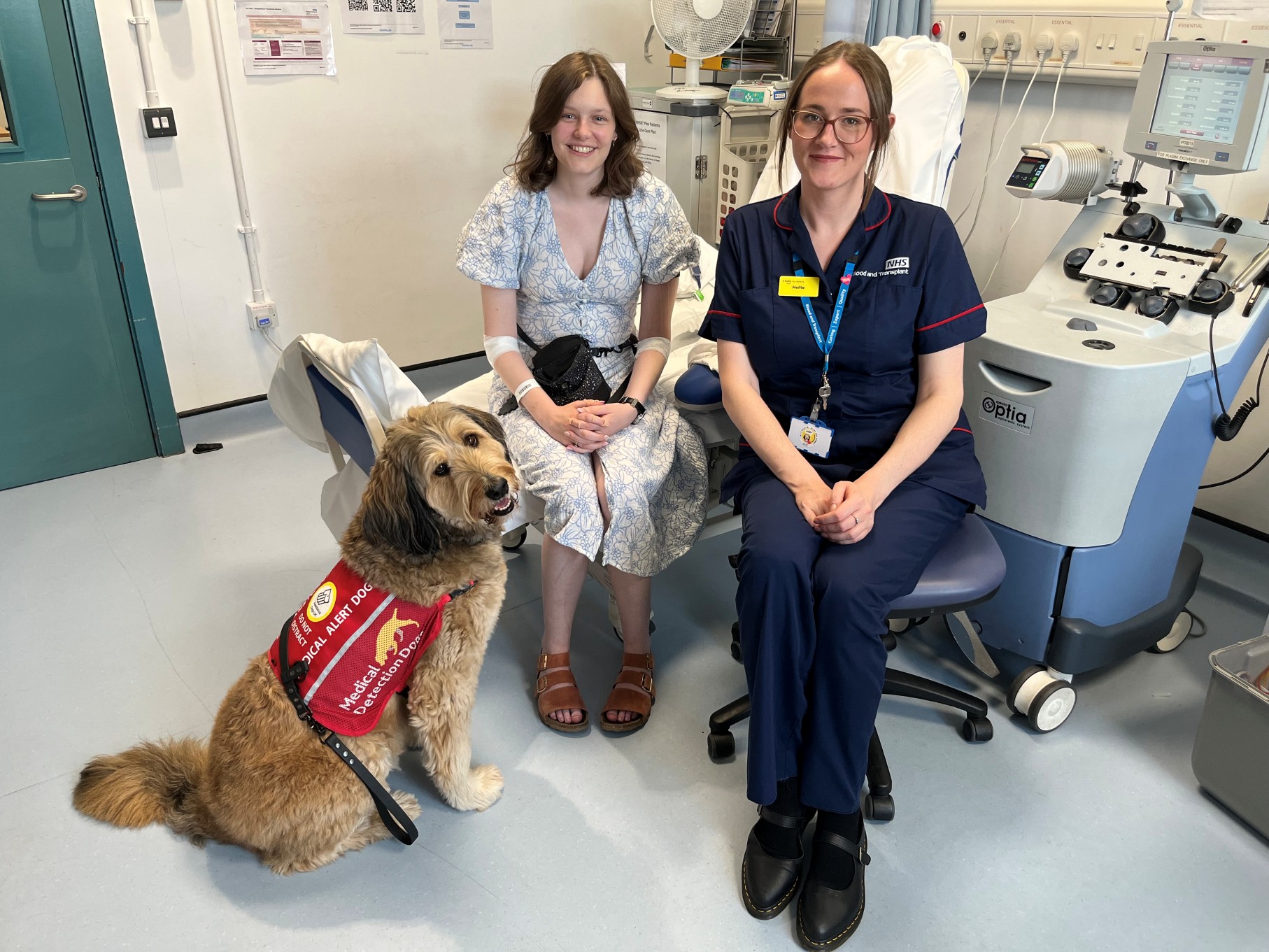 The clever canine has been trained by May to spot when she will faint, by sensing changes in her owner's body - before she knows anything is wrong - and warns her. If Winnie spots a faint, she stares at May and taps May with her paw.
Winnie's help has enabled May to get regular plasma exchange treatment at NHS Blood and Transplant's Therapeutic Apheresis Unit (TAS) in Birmingham, which has changed her life. NHSBT's TAS units provide specialist blood treatment for rare and serious conditions. The
TAS unit removes misfiring antibodies from her body, by removing some of her blood plasma, and replacing it with a plasma substitute.
May says: "Winnie gives me safety. She is lovely and we love being together – I don’t know what I'd do without her.
"The plasma exchange treatment has been life-changing. Until then I had no life, I just did what was necessary to get through the day, it wasn't living."
Doctors think spinal surgery in 2017 triggered a number of underlying health issues.
2 of them, postural orthostatic tachycardia syndrome and small fibre neuropathy (an autoimmune disorder, where her own antibodies attack her own nervous system), cause regular fainting. The impact was devastating, leaving May unable to live alone, be by herself, work.
May's story
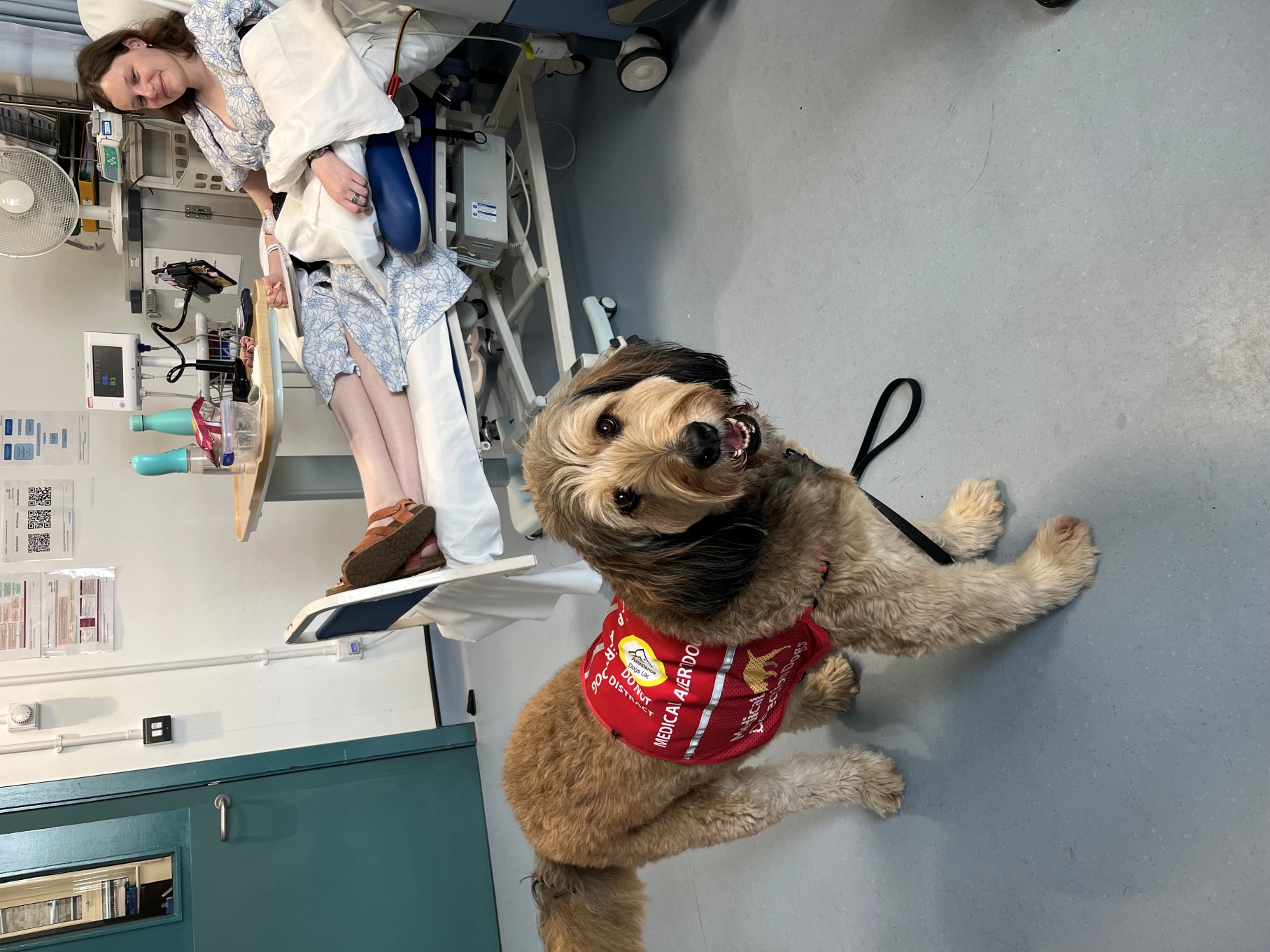 May, aged 30, who has had to move back in with her parents in Birmingham, says:
"I have lots of different symptoms and use a wheelchair. The worst is the fainting episodes. It was up to 15 times a day without warning. It was dangerous and exhausting. I had little life.”
May read online about dogs identifying medical issues and got Winnie, a Bernese Mountain Dog crossed with a poodle, as a puppy in 2021.
May trained the now five-year-old, with the support of the charity Medical Detection Dogs, to become her Medical Alert Assistance Dog. Winnie can smell changes in her body - blood flow and heart rate - ahead of her passing out.
Winnie stares at May then paws at her leg, so May knows she should rest, which reduces the severity of the episode, occasionally preventing it.
May says: "Before Winnie was trained all I could do was sleep, wake up and look after our basic needs then go back to bed, I had no life.
"To have a warning is invaluable, I can stop myself getting hurt. Occasionally I can stop a faint but it’s usually about resting to stop the severity as they make me very tired and sick."
May's life was still dominated by fainting episodes and doctors had exhausted all treatment options when she discovered online that plasma exchange treatment had helped other patients.
May had a trial at NHSBT's Birmingham TAS unit which improved her symptoms. NHSBT's plasma exchange treatment for May has continued. The NHSBT team removes Mays own blood plasma, which contains antibodies attacking her own body, replaces it with plasma substitute. The treatment has reduced May's fainting episodes to about eight times daily.
Winnie keeps a watchful eye – or rather nose – on May at all her appointments.
May says: "A huge thank you to the Therapeutic Apheresis Services unit for my treatment. Thanks to the staff for always welcoming Winnie – I couldn’t do it without her and I’d be in a really bad place without the treatment - my life had stopped.
"Plasma exchanges reduce my fainting episodes. Winnie warns me and reduces the severity of the faints I do have - the combination has been life changing. I have some of me back and some of my life back.
"I don’t have such anxiety and worry every day. I can do so much more now, I can do something positive with my time and I have hope for the future."
NHSBT's TAS units carry out a range of specialist treatments including plasma exchange treatment. Birmingham’s unit, in Queen Elizabeth Hospital, welcomes Winnie, alongside May, every couple of weeks for the treatment that has transformed her life.