Buckinghamshire patients benefitting from new transfusion service that allows more patients to be treated locally
People living with sickle cell disease across Buckinghamshire are benefitting from a new service that allows regular red blood cell exchanges close to home.
A collaboration between NHS Blood and Transplant (NHSBT) and Milton Keynes University Hospital NHS Foundation Trust (MKUH), means NHSBT’s Therapeutic Apheresis Services (TAS) team now offer a regular red cell exchange service serving Milton Keynes Hospital.
The programme allows more patients to be treated locally - a lifeline for patients living with sickle cell disease, who may regularly need red cell exchanges, which is where their misshapen red blood cells are removed and replaced with healthy donor blood.
Patients previously had to regularly travel to Oxford for the treatment, a substantial commitment time and money wise, when they may require this treatment every four to eight weeks for the rest of their lives.
While inpatients with an acute sickle cell crisis (sudden, extremely painful episodes that can be life-threatening) have been receiving treatment locally, patients receiving regular red blood cell exchange transfusions to prevent complications were required to travel to Oxford, more than 40 miles away.
Abdulsamad's story
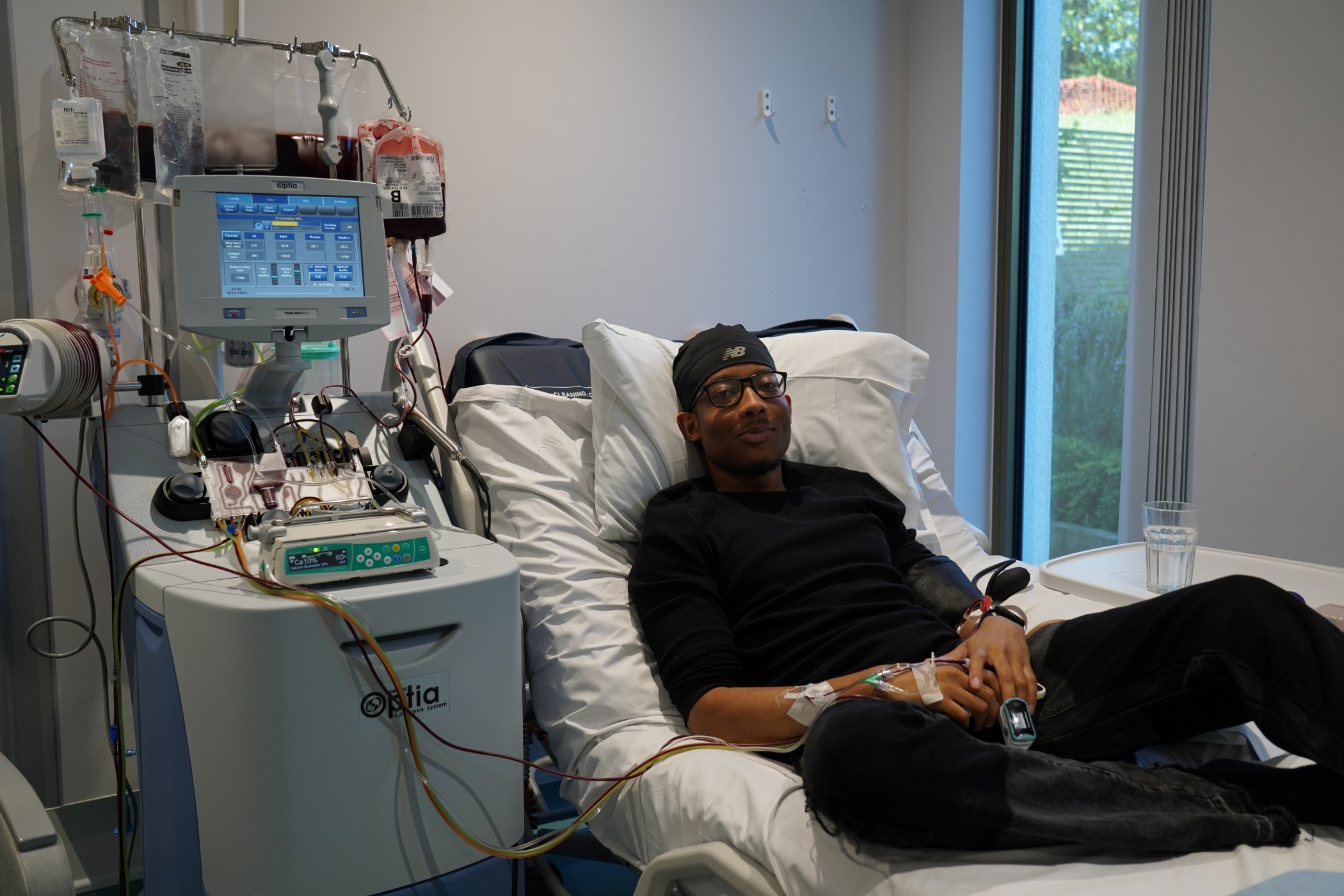 Abdulsamad Abdullah, aged 25, lives in Milton Keynes. He's an interior architecture graduate, a regular at the gym, and one of 5 siblings – he also lives with sickle cell disease. He was one of the first patients to be treated, by NHSBT TAS nurses, as a part of the collaboration. He is having a red cell exchange every four weeks at MKUH, to manage sickle cell disease and keep symptoms under control. This treatment is keeping him from having crises that bring him as an inpatient.
Abdulsamad has had the condition since birth and has required red cell exchange blood transfusions as treatment since the age of 17. Until May 2026, Abdulsamad travelled to Oxford every 4 weeks for his treatment. Each visit meant more than 50 hours of travel a year for him and his mum, on top of the two hours spent having each procedure. Now, his red cell exchange blood transfusion is delivered at MKUH.
He says: "Having treatment so close to home has made a massive difference to me and mum. We don’t have to spend so long travelling and mum doesn't have to give up as much of her time to accompany me to appointments.
"Sickle cell means I have an increased risk of infection and it can also cause really severe pain for days at a time. There have been periods when it got so bad that I struggle to remember anything - I just know that I've been seriously poorly.
"The treatment improves my immunity and reduces my pain, which I'm grateful for but seeing my mum get some time back also makes me very happy."
Sickle cell disease is the country's fastest growing genetic blood disorder and is more prevalent in people of Black heritage. The serious, lifelong, condition can cause organ failure, strokes, loss of vision and can be fatal.
Patients living with sickle cell disease produce unusually shaped red blood cells that can cause problems as they do not live as long as healthy blood cells and can block blood vessels. It is estimated that there are around 17,000 people with sickle cell in the UK.
Statements
More about Therapeutic Apheresis Services
A single patient receiving regular red cell exchanges can require blood from up to 100 donors each year. NHSBT's TAS units (10, across the country) carry out an average of around 2,400 red cell exchanges every year.
The new Buckinghamshire programme is now running, launching in late April. The investment in the programme comes from the NHS England-run MedTech Funding Mandate.