Organ donation projects
Key information for applications focusing on living kidney and deceased organ donation.
Areas of focus for organ donation projects
Projects focusing on organ donation can look to engage all ethnic minority and faith communities in the following areas.
A clinical need for more donors
While Black, Asian and minority ethnic consent rates for donation after death have been slowly increasing over the last decade, research shows that families from these communities are far less likely to support donation going ahead than White families.
There are a range of reasons for this, including that families felt it was against their religious or cultural beliefs or they were unsure whether the patient would have agreed to donation.
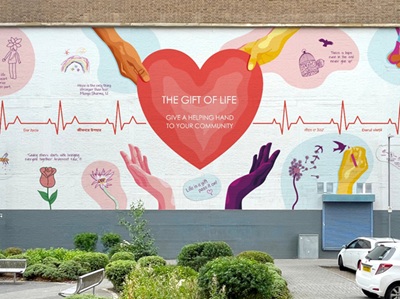 The shortage of organ donors from these communities matters, because people from Black and Asian communities are more likely to develop high blood pressure, diabetes and certain forms of hepatitis than White people. These conditions make them more likely to need a transplant.
Around a third of patients waiting for a kidney are from Black, Asian and minority ethnic communities.
Although many Black, Asian and minority ethnic patients are able to receive a transplant from a White donor, for many the best match will come from a donor from the same ethnic background.
Unfortunately, donation rates from these communities are a lot lower than for White people. This means that Black, Asian and minority ethnic patients often wait longer for a transplant.
By increasing the number of deceased organ donors from these communities each year, we will reduce the waiting time gap and save and improve the lives of more patients from Black, Asian and minority ethnic communities.
In the years following the pandemic, we saw great improvements in both the number of organ donors and life-saving transplants, however, this trend did not continue last year. Instead, the number of deceased donors fell by 7%, and the number of patients receiving a transplant declined by 2%.
As a result, more people than ever are waiting for an organ transplant. At the end of March 2025, 8,096 patients were waiting for a transplant, the highest number on record.
With less than one per cent of people in the UK dying in the circumstances which allow for organ donation, it is vital we maximise every opportunity for donation.
A rising waiting list
In the years following the pandemic, we saw great improvements in both the number of organ donors and life-saving transplants. However, this trend did not continue in 2025. Instead, the number of deceased donors fell by 7%, and the number of patients receiving a transplant declined by 2%.
As a result, more people than ever are waiting for an organ transplant. At the end of March 2025:
- 8,096 patients were waiting for a transplant, the highest number on record, with a further 3,883 patients temporarily suspended from transplant lists
- 463 patients died while on the active list waiting for their transplant, compared with 418 in the previous year, an increase of 11%
Registering a decision not to donate
We know that the proportion of people from Black, Asian and minority ethnic communities who have registered a decision to donate is lower than for White people across the UK.
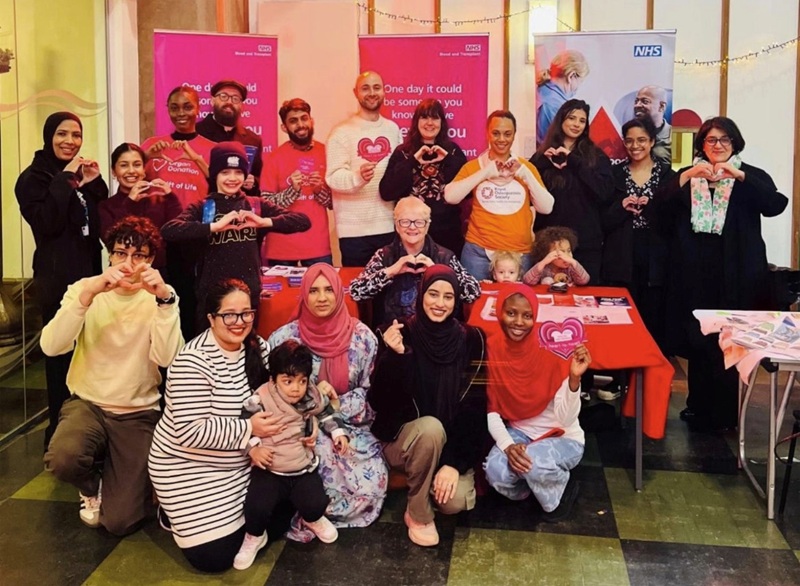 Also, of those who have told us they are from a Black, Asian, mixed heritage or minority ethnic background, the vast majority have recorded a decision not to donate, referred to as an 'opt out' decision. Much of this 'opt out' registration activity has been in response to incorrect information circulating on platforms like WhatsApp several years ago.
A look at the data since the law change
Since the change in organ donation legislation, opt-in registrations on the NHS Organ Donation Register have steadily increased to more than 28 million people in the UK (42% of the population), which is encouraging and shows that the organ donation message is clearly making its way into people’s consciousness.
Of the people who opted in to the Organ Donor Register and reported their ethnicity in 2024/2025, 11.0% were from ethnic minority backgrounds, compared to 8.3% in 2020/21. However, there has also been a slight increase in the number of people choosing to opt out, but that percentage remains small in comparison, at just 2.7 million people (4% of the population).
The deemed consent law introduced in 2020 did not replace expressed consent via the register. Many people still want to record their donation decision on the NHS Organ Donor Register and families value this confirmation allowing them to more readily support donation and making the process a lot easier at an already very difficult time.
More information: Understanding consent for organ donation
Promoting the facts
While it is everybody’s choice whether they want to donate, we want to ensure that people base their donation decision on the facts. We also want people to discuss their decision with those closest to them, so their loved ones know what they want to happen.
We know that an individual’s faith or beliefs are an important consideration when making their choice regarding organ donation, so initiatives that reassure people around the acceptability of organ donation in the context of their faith or beliefs are important and encouraged.
More information: Get the facts about organ donation
Kidney donation
As of March 31, 2025, 2,526 people from ethnic minority backgrounds were still waiting for a transplant, and almost a third of the total waiting list for a kidney is made up of ethnic minority patients.
Kidneys are the most needed organ for transplant, with those waiting for a kidney transplant making up more than two-thirds of the waiting list. Last year, transplants from living kidney donors increased by 6% to 964, representing 29% of the total kidney transplant programme. However, kidney transplants from deceased donors fell by 5%.
Currently, 61% of Asian and 46% of Black kidney transplant recipients receive an organ from a living donor of the same ethnicity. 7% of deceased kidney donors are from ethnic minority groups whilst ethnic minority patients represent 37% of transplants and account for 35% of the kidney transplant waiting list.
Key groups for projects focusing on organ donation
Any community organisation focused on engaging Black, Asian, mixed heritage or minority ethnic communities can apply for funding to deliver a project around organ donation.
Our insights show us that further engagement is vital in the following groups (click on each group to find out more).
Living kidney donation
Living kidney donation is when a person gives one of their healthy kidneys to someone with kidney failure who needs a transplant (the recipient). This could be a friend or family member, or someone they do not already know.
A successful transplant from a living donor is the best treatment option available for most people with kidney disease. Studies have shown that the average patient survival at 10 years is 90% with a living donor transplant compared to 75% after a deceased donor transplant.
There are 6000 people in the UK with kidney disease who are on the National Transplant List in need of a kidney. Hundreds of people in the UK die each year in need of a kidney transplant.
There are currently more than 7000 people who are active on the National Transplant List in need of a kidney (see stats as of 16 April 2026).
The average patient survival at 10 years is 85% with a living donor transplant compared to 73% for a donation after brain stem death (DBD) transplant and 66% for a donation after circulatory death (DCD) transplant.
Applying for funding
The application window for the latest round of funding is now open. The closing date for applications is [add date and time].
If you have any further questions about the programme or previous projects we have funded, please email the Community Grants team and we will respond as soon as we can.


