
Streamlining donor genotyping to improve platelet transfusion outcomes
Finding matched platelets for patients can be lifesaving - however, it can be challenging, especially when patients develop antibodies to donor platelets.
The patients need the right donor, which relies on accurate typing of white blood cells and platelets. Testing is complex and some platelet types are very rare.
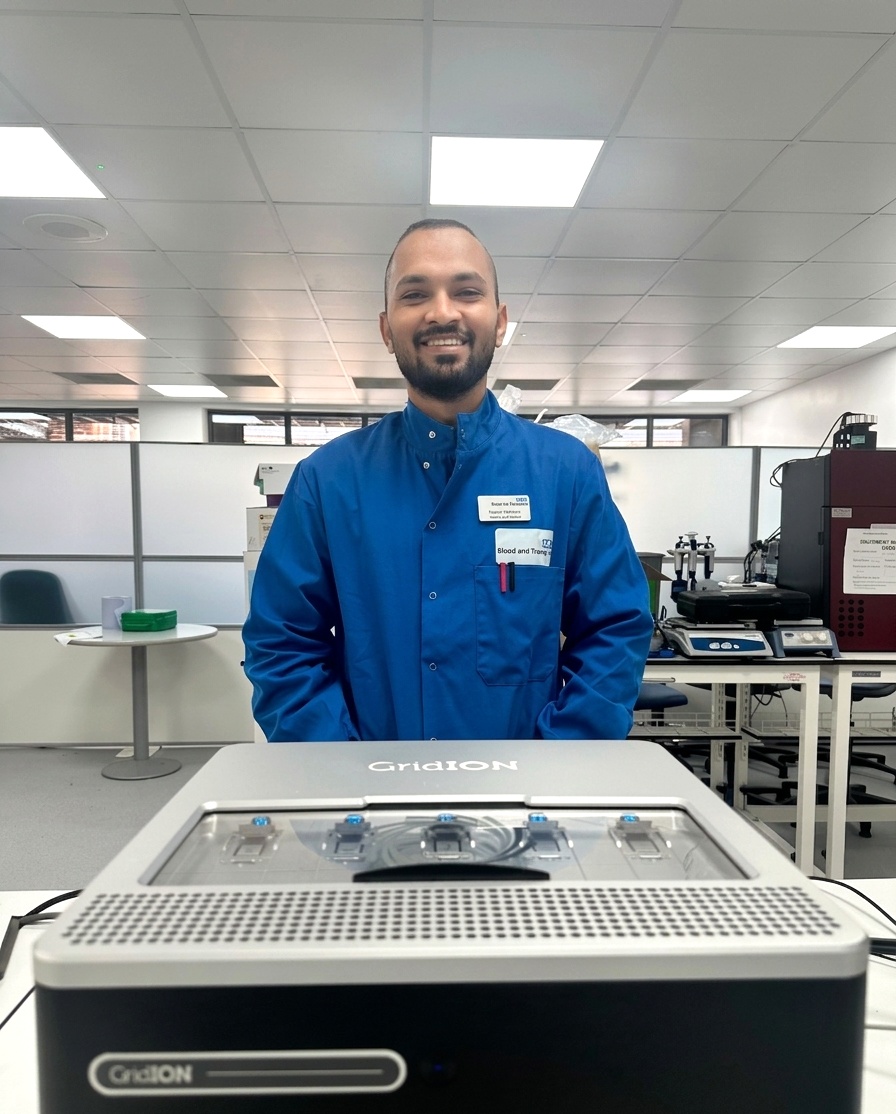 A team at NHSBT developed a new method for using a platform to get more accurate results and detect rarer types, with the results just published in the International Journal of Immunogenetics.
The NHS Blood and Transplant Pathology Service Development team were able to streamline all the different white cell and platelet typing into a single test, using Oxford Nanopore long-read sequencing. The method delivers accurate results and allows us to detect rarer platelet types not previously tested.
Kate Downes, Head of Genomics at NHSBT, said:
"For patients, this test could lead to more precisely matched platelet units and improved transfusion outcomes – more lives saved and improved. For NHS Blood and Transplant, this work represents future-ready genomic testing to support transfusion and transplant services across our NHS."